
How to Read and Understand an Income Statement Bench Accounting
AI customer service for higher customer engagement
October 23, 2024Best Place to Buy Replica Watches, TD Watches, Td Replica Watches
October 31, 2024How to Read and Understand an Income Statement Bench Accounting
The declining balance method accelerates depreciation, front-loading expenses to the earlier years, which can be advantageous for assets that lose utility rapidly, like technology equipment. Meaning, for every dollar that comes into your company, you keep $0.11 as retained earnings. If your total expenses outweigh your revenue, your net income will be in the negative. For lean startups still fine-tuning their technology and attracting venture capital, temporarily operating at a loss may not be a bad thing. Learn how to read income statements, and you’ll unlock the ability to understand your finances.
- A company with a higher ROE is more profitable and efficient than one with a lower ROE.
- The contribution margin format allows the company’s executives to see the relative profitability of its products or other segments.
- The final number derived from the calculation is the cost of goods sold for the year.
- The P&L statement shows a company’s ability to generate sales, manage expenses, and create profits.
- Usually, it goes against the cash method for accounting which only recognizes cash transactions.
- In other words, a variable expense increases when an activity increases, and it decreases when the activity decreases.
- A fiscal year is an accounting year that ends on a date other than December 31.
Payroll Taxes Recognized in Expenses
For instance, if a company pays one share as a dividend for each share held by the investors, the price per share will be cut in half because the number of shares will double. Because the company has not created any real value simply by announcing a stock dividend, the per-share market price is adjusted according to the proportion of the stock dividend. Retained earnings are the cumulative net earnings or profits a company keeps after paying dividends to shareholders. Dividends are the last financial obligations paid by a company during a period. “Retained” refers to the fact that those earnings were kept by the company.
Examples of Income Statements of Popular Companies
- The book value of an asset is also referred to as the carrying value of the asset.
- For a real-world example, let’s look at Microsoft Corporation’s June 2024 Income Statement as reported to the Securities and Exchange Commission (SEC).
- Other or nonoperating items include interest income, interest expense, and gains and losses on sale of assets used in the business, loss on lawsuit, etc.
- Statement of Retained Earnings and the Income Statement both provide financial information about a company.
For a retailer the interest earned on its temporary investments is a nonoperating revenue (or nonoperating income). If the XXL Company or a competitor were to construct a similar building today, the cost might be $1,500,000 and the income statement will be reporting depreciation expense of $60,000. When a company sells or scraps a long-term asset that had been used in the business, the asset’s cost what accounts go on the income statement and accumulated depreciation must be removed from the company’s accounts. Both the manufacturer’s cost of sales and its SG&A expenses are operating expenses.

Effect of Drawings on the Financial Statements
It is the money used for research and development during the reporting period. For example, a customer buys 100 packs of protein bars on credit totaling $500 in August; this would be recorded as revenue on the income statement for the month of August. When the customer pays the money later, it would be regarded as a receipt of $500 and would be recorded on the balance sheet as an increase in cash of $500 and a reduction of the account receivable by $500. Revenue and expenses on the income statement are classified as operating when it is related to the primary business operations.
Unrealized Gains & Losses Accounting
For example, revenue from the sale of a product, rendering of a service, or any income that is gotten from the main operation of the business would be regarded as operating revenue. Large companies may have thousands of income statement accounts in order to budget and report revenues and expenses by divisions, product lines, departments, and so on. Fees earned from providing services and the amounts of merchandise sold. Under the accrual basis of accounting, revenues are recorded at the time of delivering the service or the merchandise, even if cash is not received at the time of delivery.


The general guidelines and principles, standards and detailed rules, plus industry practices that exist for financial reporting. If ABC understood that by spending an additional $1 it could possibly earn $7, it may have produced more loaves. In other words, risking $200 in ingredients to potentially receive an additional $1,400 may have motivated ABC to produce more Online Bookkeeping loaves. Looking at it another way, ABC would recover the additional $200 cost for ingredients by selling just 30 of the 200 additional loaves.
- The book value of bonds payable is the combination of the accounts Bonds Payable and Discount on Bonds Payable or the combination of Bonds Payable and Premium on Bonds Payable.
- It is used for comparing the performances of companies in the same industry.
- Lenders and investors look at your profit margins to see how profitable your company is, and decide whether to give you money.
- In short, the balance sheet is a financial statement that provides a snapshot of what a company owns and owes, as well as the amount invested by shareholders.
- Net income is used for calculation in many ratios in order to evaluate the company’s performance, including net profit margin, return on assets, return on equity, and earnings per share (EPS).
Related AccountingTools Course
It is the expense element of income statement that ties directly with sale revenue. The three main elements of income statement include revenues, expenses, and net income. Revenues come from several sources; while expenses are incurred for different purposes in conducting business.
Income statement is one in a set of five financial statements
Both the income statement and balance sheet are important tools for business owners and investors alike. By understanding how these two financial statements work, you can get a better grasp of a company’s overall financial health. The multi-step revenue statement provides more information than a single-step statement of operations, as it breaks down income and expenses into different categories. This helps investors and analysts to better understand a company’s financial health. The categories used in a multi-step income statement can vary, but typically include operating expenses, cost of goods sold, and other income or expenses. A multi-step income statement is a profit and loss statement that shows how revenue and expenses are related to each other.
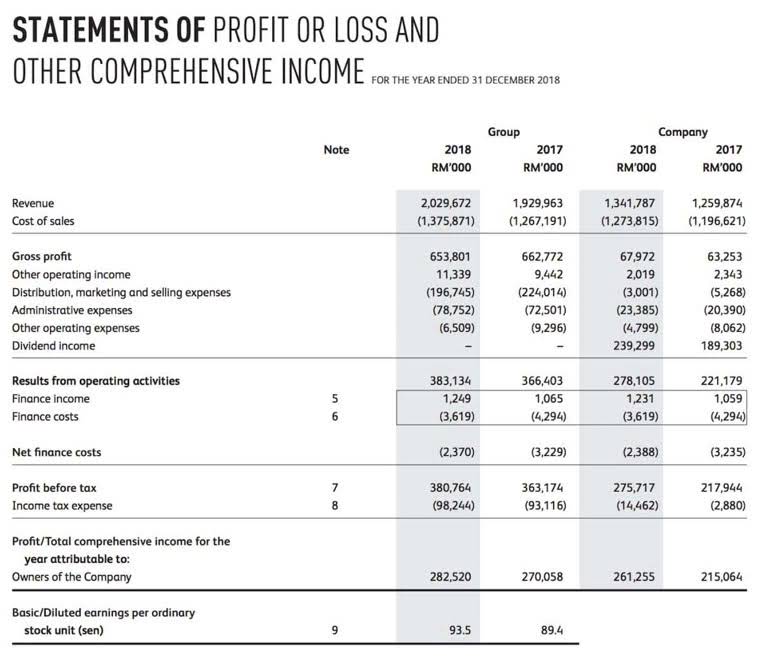
For example, a partial income assets = liabilities + equity statement might show total revenue, total expenses, and net income only. Operating expenses are the costs of a company’s main operations that have been used up during the period indicated on the income statement. For example, a retailer’s operating expenses consist of its cost of goods sold and its selling, general and administrative expenses (SG&A). Since the company is not in the business of selling long-term assets, the amount received is not included in its operating revenues. Instead, only the gain or loss on the sale is shown on the income statement after the operating income.
